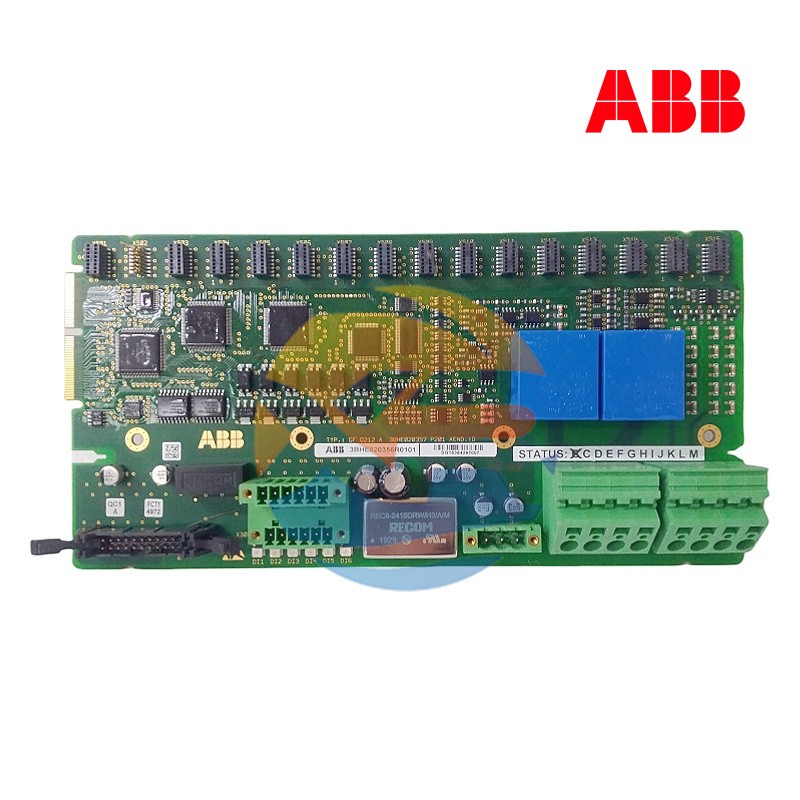
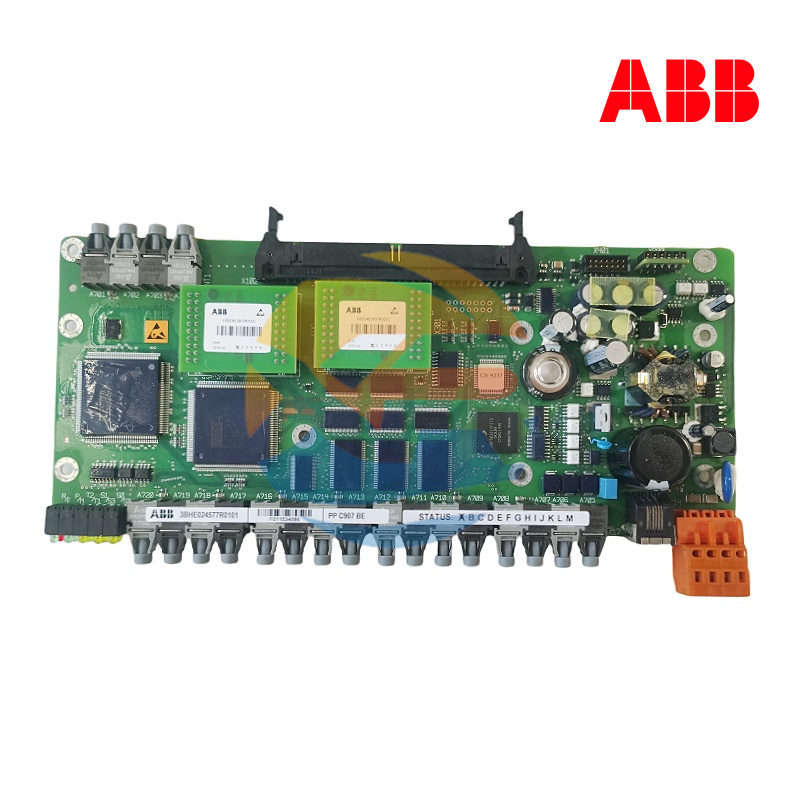
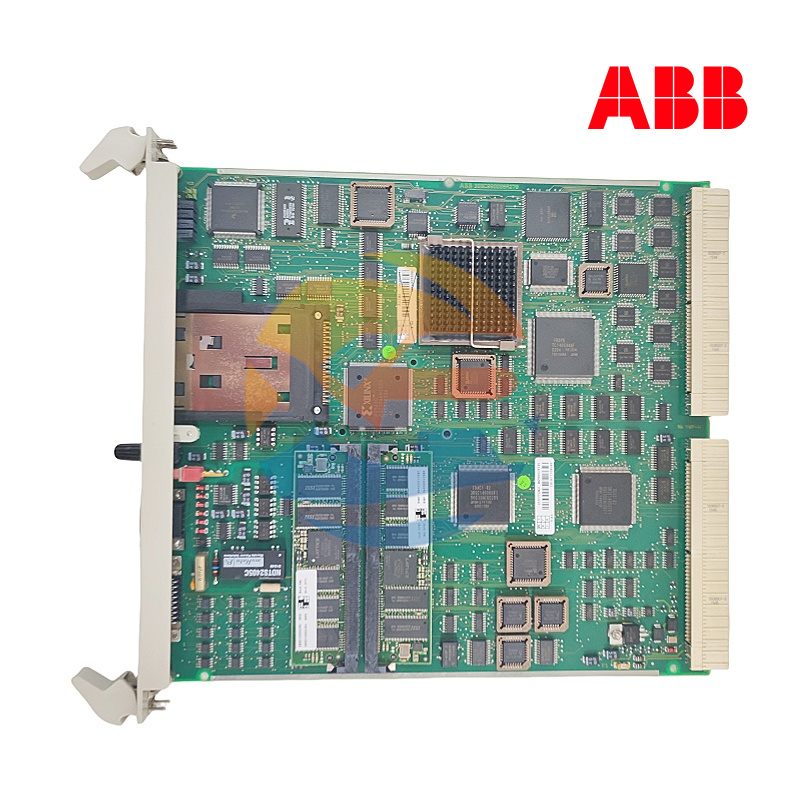
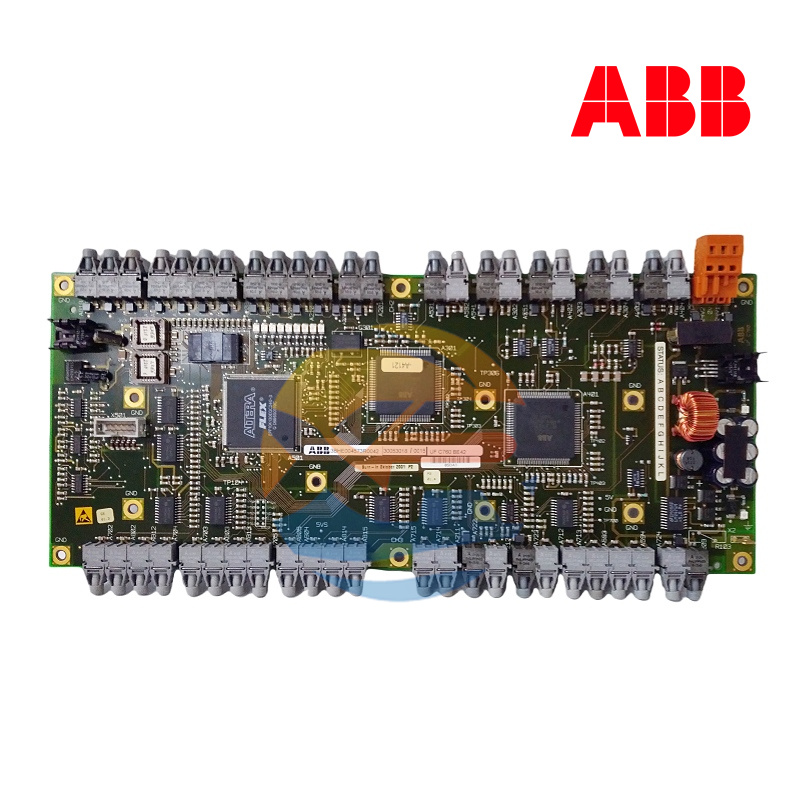
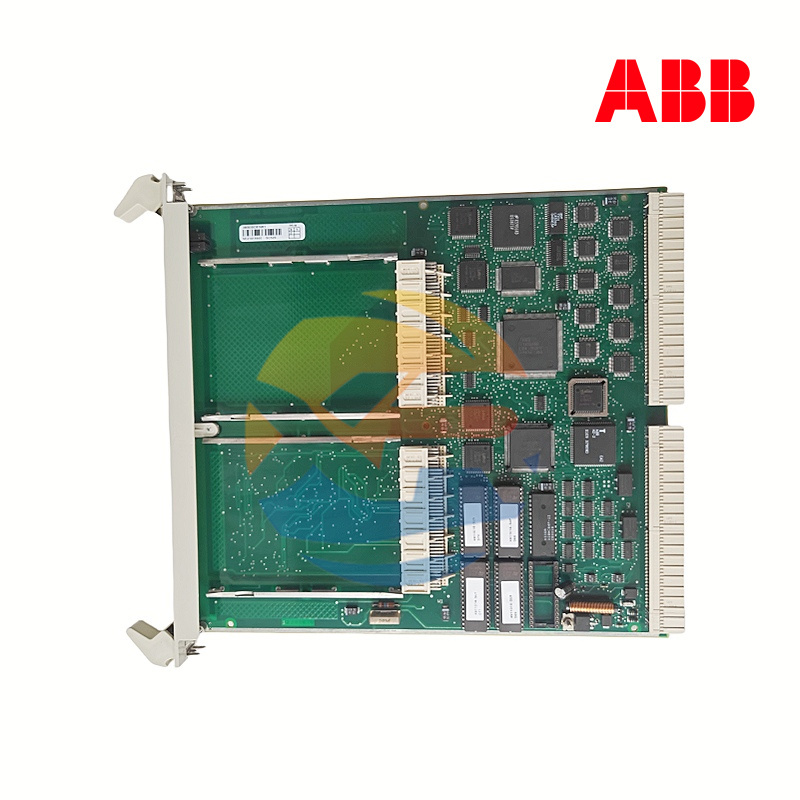
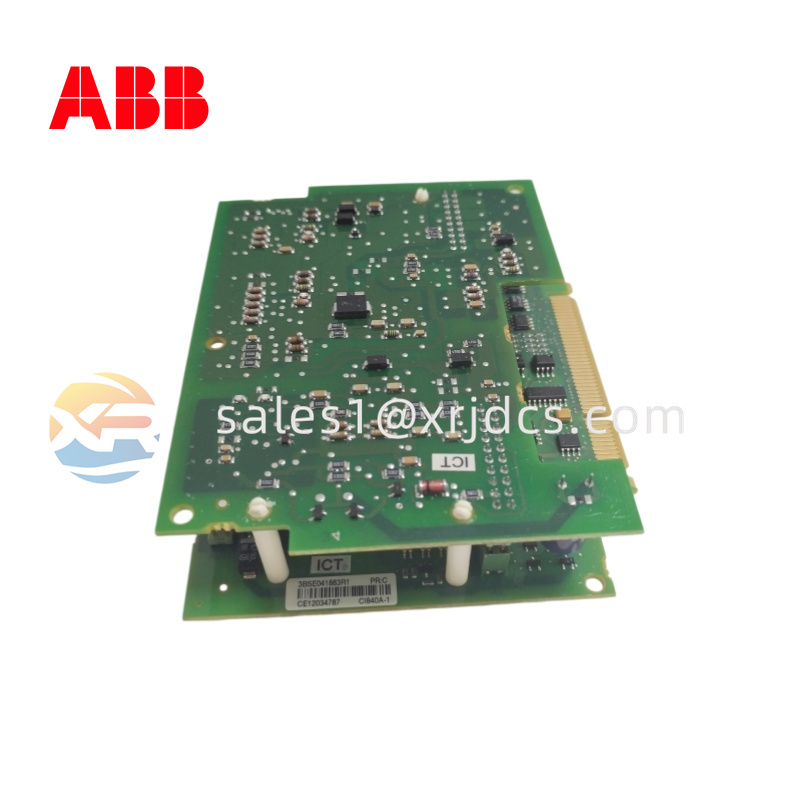
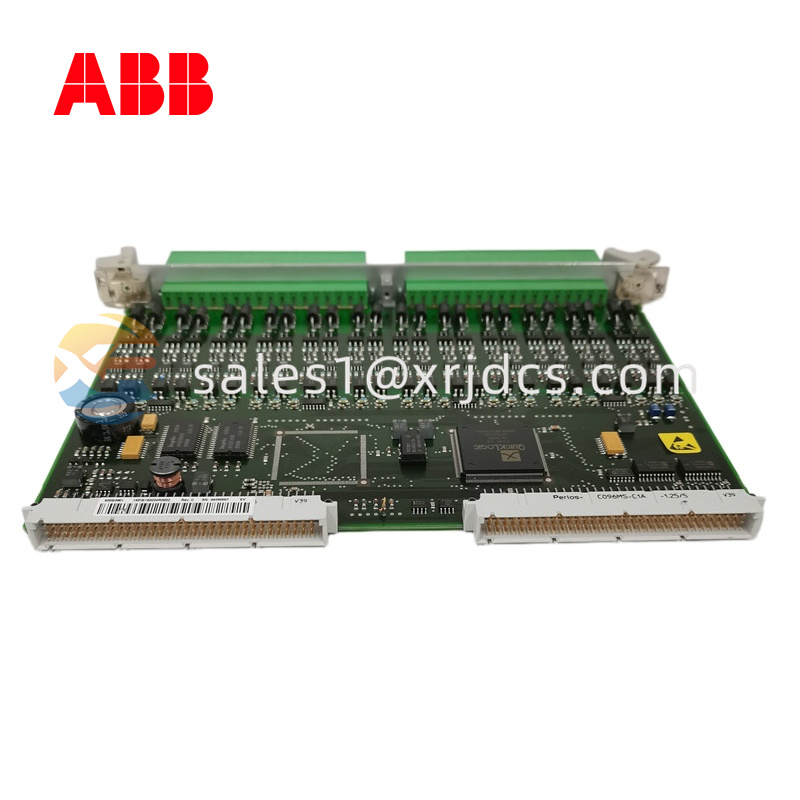
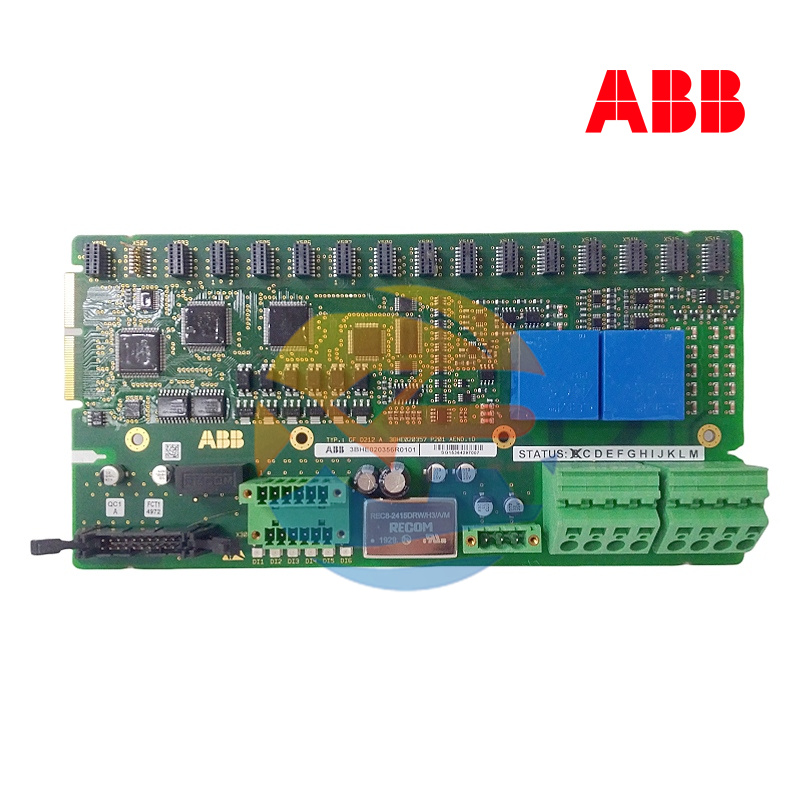
ABB GFD212A Excitation Control Interface Module
Product Overview
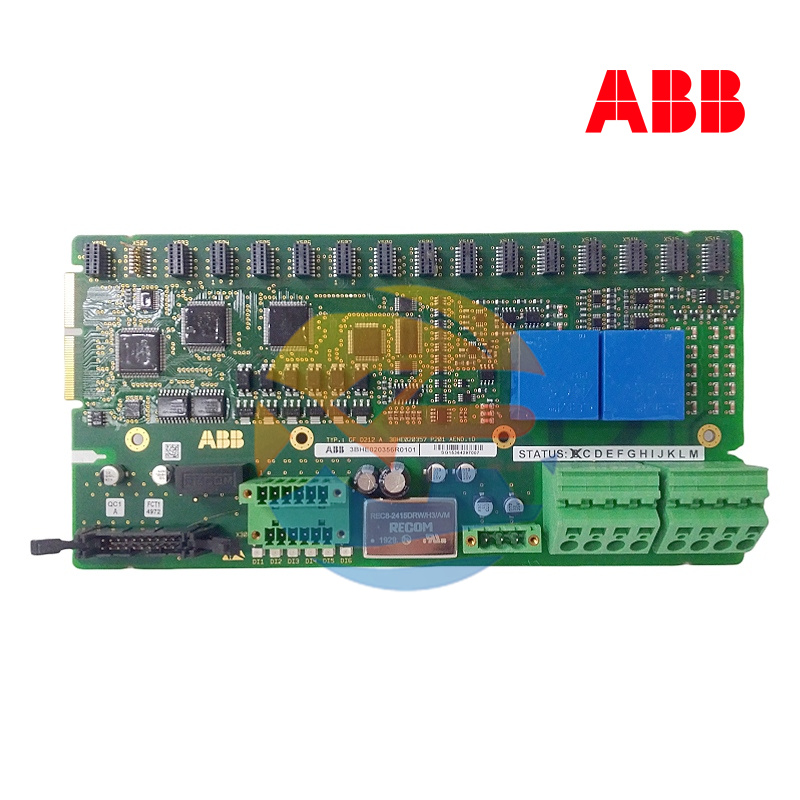
The ABB GFD212A (commonly referenced as 3BHE020356R0101) is an industrial control module used in ABB excitation, power conversion, and automation systems. It serves as an interface and control component within generator excitation systems, static power converters, and high-performance industrial control architectures. The module is designed to facilitate signal processing, communication, current regulation, and control functions required for reliable operation of power generation and drive applications.
Widely deployed in power plants, industrial drive systems, and converter installations, the GFD212A contributes to stable voltage regulation, system monitoring, and coordinated control of field excitation equipment.
Application Industries
The ABB GFD212A is commonly utilized in:
- Power generation facilities
- Generator excitation systems
- Industrial automation plants
- HVDC converter stations
- Static power converter systems
- Heavy manufacturing industries
- Mining and metallurgy operations
- Oil and gas processing facilities
- Utility transmission infrastructure
- Large motor drive applications
Its flexibility makes it suitable for installations requiring precise control, high reliability, and real-time communication between field equipment and supervisory systems.
Technical Specifications
General Information
- Manufacturer: ABB
- Model: GFD212A
- Reference Number: 3BHE020356R0101
- Product Type: Excitation Control / Interface Module
- Series: ABB Excitation & Industrial Control Systems
- Power Supply: 24 VDC (system-dependent configurations available)
- Communication Support: Industrial communication interfaces
- Mounting Type: Panel or rack-mounted installation
- Operating Environment: Industrial control cabinets
- Application Focus: Excitation regulation, signal processing, interface control
- Industrial Protection: Designed for continuous-duty operation
Functional Characteristics
Precision Excitation Regulation
The GFD212A processes generator voltage and current feedback signals and supports the control of excitation systems responsible for maintaining stable generator output voltage and reactive power performance.
Signal Processing Capability
The module performs continuous monitoring and processing of operational signals, enabling accurate control actions and improved system responsiveness under varying load conditions.
Communication Integration
Designed to function as an interface between control equipment and field devices, the module supports efficient data exchange within industrial automation and power management architectures.
Protection Support
Advanced protection functions may include support for:
- Over-excitation protection
- Under-excitation protection
- Field current supervision
- System fault monitoring
- Voltage regulation safeguards
These capabilities help improve equipment protection and operational reliability.
Structure and Components
The ABB GFD212A incorporates a rugged industrial electronic design consisting of:
| Component |
Function |
| Signal Processing Circuits |
Analyze input measurements |
| Control Logic Section |
Executes regulation algorithms |
| Communication Interface |
Exchanges data with controllers |
| Protection Circuitry |
Supports fault detection |
| Power Conditioning Stage |
Ensures stable module operation |
| Diagnostic Functions |
Facilitates troubleshooting |
| Industrial Connectors |
Secure field and system connections |
The modular architecture simplifies maintenance and replacement while supporting long-term operation in demanding environments.
Key Advantages
High Reliability
Engineered for mission-critical applications where continuous operation is essential, the GFD212A supports stable performance in power generation and industrial control environments.
Enhanced System Stability
By supporting precise excitation and control functions, the module helps maintain generator voltage stability and overall system efficiency.
Flexible Integration
The module can be integrated into ABB control architectures and associated automation systems, making it suitable for upgrades, retrofits, and modernization projects.
Reduced Downtime
Built-in diagnostic capabilities and modular construction allow maintenance personnel to identify and resolve issues efficiently, reducing system downtime.
Installation Recommendations
For optimal performance:
- Verify compatibility with the target ABB excitation or control system.
- Ensure proper grounding and shielding practices.
- Install within a protected industrial control cabinet.
- Confirm all signal and power connections before commissioning.
- Follow ABB-approved configuration procedures.
- Conduct functional testing after installation.
Correct installation contributes significantly to operational reliability and equipment lifespan.
Maintenance Guidelines
Regular maintenance should include:
- Visual inspection of connectors and terminals
- Verification of communication status
- Functional testing of excitation control signals
- Cleaning of dust and contaminants
- Inspection of grounding connections
- Review of diagnostic and alarm records
Preventive maintenance can help maximize system availability and extend module service life.
Typical System Benefits
Organizations utilizing the ABB GFD212A can achieve:
- Improved generator voltage regulation
- Stable excitation system performance
- Enhanced power quality
- Greater operational reliability
- Faster fault detection
- Simplified maintenance procedures
- Improved integration with automation platforms
- Reduced unplanned outages
Conclusion
The ABB GFD212A Excitation Control Interface Module is a specialized industrial control component designed for demanding power generation and automation applications. Combining advanced signal processing, excitation regulation capabilities, communication integration, and industrial-grade reliability, it plays a critical role in maintaining stable generator performance and efficient system operation. Its robust construction and flexible functionality make it a valuable solution for utilities, industrial plants, and modern power control infrastructures




 Switzerland